UK Road Signs: The Complete Guide for Your 2026 Theory Test
Master all UK road signs for your 2026 DVSA theory test — complete guide with official images, colour and shape rules, memory tips and free practice questions.
UK road signs fall into four categories: warning signs, signs giving orders, information signs and road works signs. Once you understand the colour and shape rules behind each category, you stop memorising individual signs and start reading them — which is exactly what the DVSA theory test rewards.
This guide walks you through every category with official sign images, explains the logic behind the system and highlights the signs that catch most learners out. By the end, you will know not just what each sign means but why it looks the way it does.
Table of Contents
- How UK road signs are organised
- Warning signs — red triangles
- Signs giving orders — circles
- Information and direction signs
- Road works signs
- The signs that catch most learners out
- Three techniques to memorise road signs faster
- Frequently asked questions
How UK road signs are organised
The UK road sign system follows a consistent logic: shape tells you the type of sign, colour tells you the urgency.
| Shape | Type | What it means |
|---|---|---|
| Triangle (pointing up) | Warning | Hazard or change ahead — prepare |
| Circle | Order | A legal instruction you must follow |
| Rectangle or square | Information | Helpful information — no legal obligation |
| Inverted triangle | Give way | A specific priority rule |
| Octagon | Stop | The only sign requiring a complete stop |
And for colours:
- Red border or background — prohibition or danger (no entry, speed limit, stop)
- Blue circle — positive instruction (you must do this)
- Blue rectangle — motorway information
- Green rectangle — primary route directions
- Yellow background — temporary signs, usually at road works
Once this framework is in your head, you can work out an unfamiliar sign even if you have never seen it before. That is exactly the skill the theory test is checking.
Warning signs — red triangles
Warning signs are upward-pointing red triangles with a white background. They alert you to a hazard or change in road conditions ahead so you can adjust your speed and position.
The golden rule: a warning sign does not tell you what to do — it tells you what to expect. How you respond is your decision as the driver.
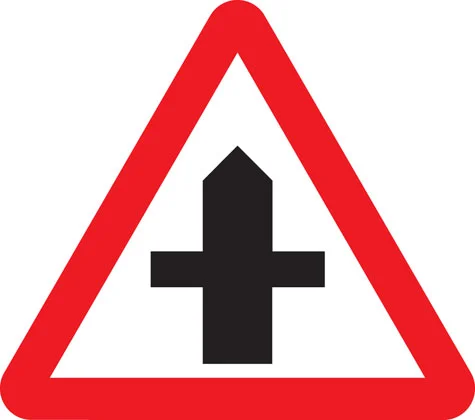
Crossroads ahead A cross shape inside the triangle. Approach with care and be prepared to give way depending on the markings at the junction.
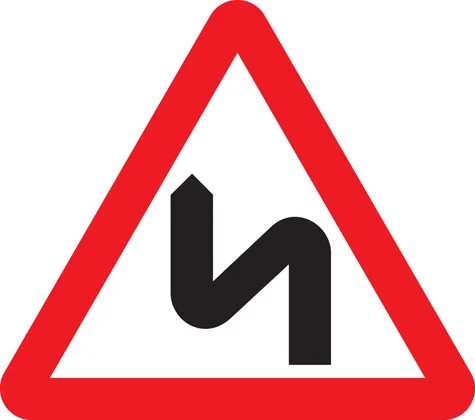
Double bend — first to the left An S-shaped arrow. The symbol shows which way the first bend goes. Reduce your speed before the bend, not during it.
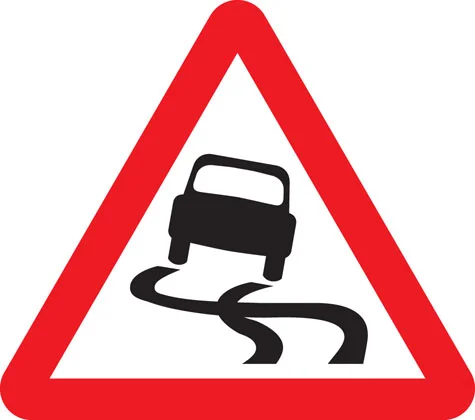
Slippery road A car with skid marks. The road may be slippery due to ice, wet mud, or a recent spill. Increase your following distance and brake gently.
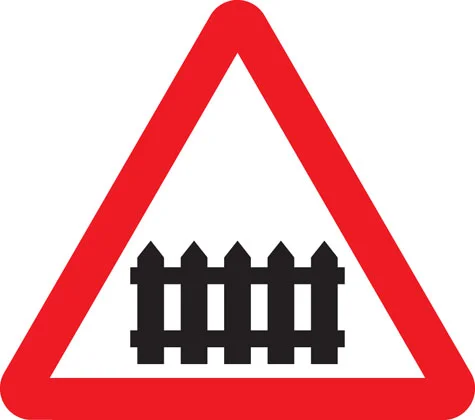
Level crossing with barrier ahead A gate symbol inside the triangle. Slow down and be prepared to stop. Never drive onto a level crossing unless the exit is clear.
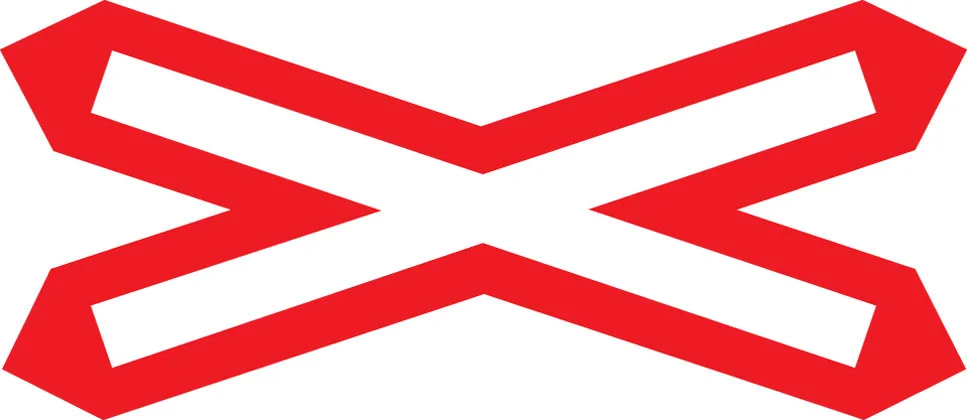
Level crossing without barrier The red and white St Andrew’s Cross marks the crossing itself. If you see this, you are at the crossing. Look and listen for trains before crossing.
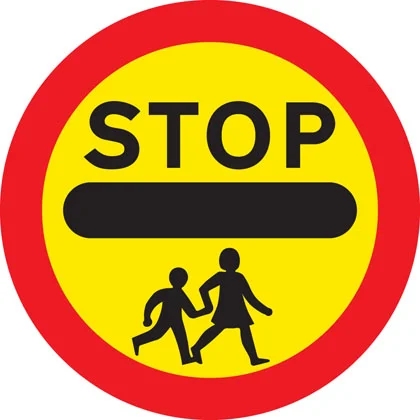
School crossing patrol ahead When a patrol officer holds up the circular STOP paddle, you are legally required to stop — not just slow down.
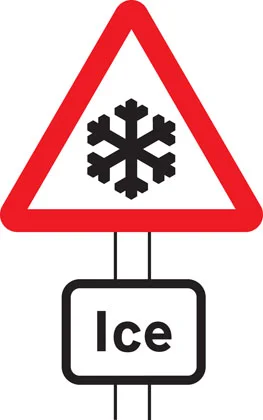
Risk of ice Snowflake pattern inside the triangle. Stopping distances can be up to ten times greater on ice.
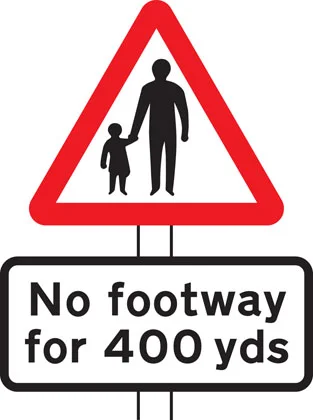
Pedestrians in road ahead This sign often appears where there is no pavement — pedestrians will be walking in the road itself.
Practice tip: Warning signs are the largest single category in the theory test. Practice all warning sign questions on TheoryMates →
Signs giving orders — circles
Circular signs are legal instructions. Ignoring them is not a mistake — it is an offence.
The colour rule here is especially important:
- Red circle = prohibition (you must NOT do this)
- Blue circle = positive instruction (you MUST do this)
Red circle signs — prohibitions
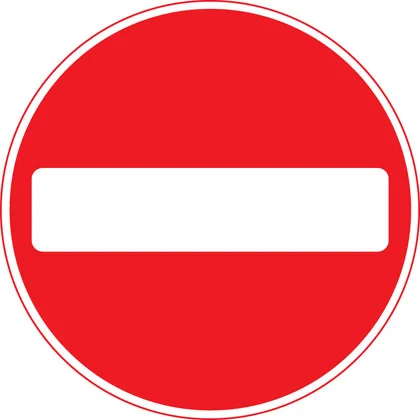
No entry — A red circle with a white horizontal bar. You must not enter from this direction at any time.
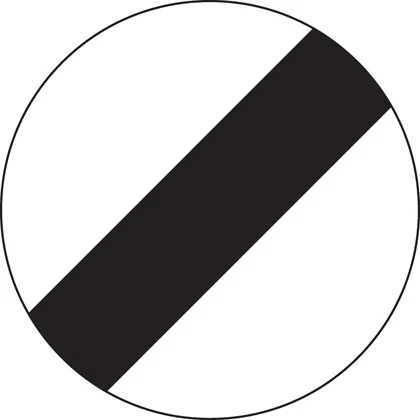
National speed limit applies — A white circle with a diagonal black stripe. This means the national speed limit applies: 60 mph on single carriageways, 70 mph on dual carriageways and motorways. Many learners get this wrong.
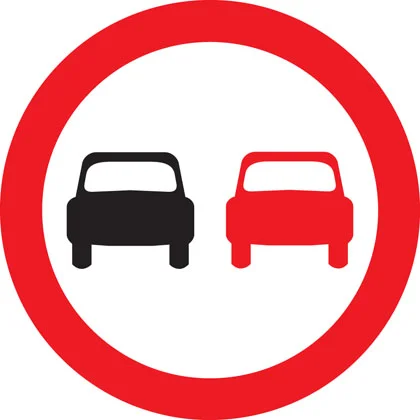
No overtaking — Two cars side by side inside a red circle. The restriction ends at an appropriate cancellation sign — not necessarily at the next junction.
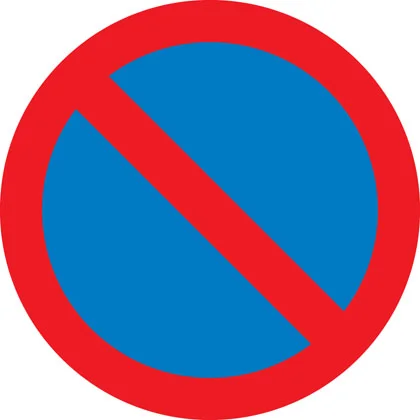
No waiting — You must not wait, but this is different from no stopping. Check any supplementary plate for time restrictions.
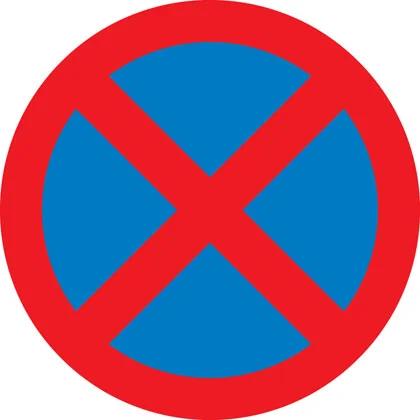
No stopping (clearway) — You cannot stop at any time, even to pick up or drop off passengers.
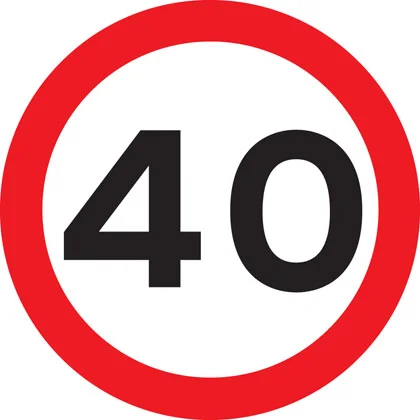
Maximum speed limit — A number inside a red circle. This is the absolute maximum — not a target or a recommendation.
Blue circle signs — positive instructions
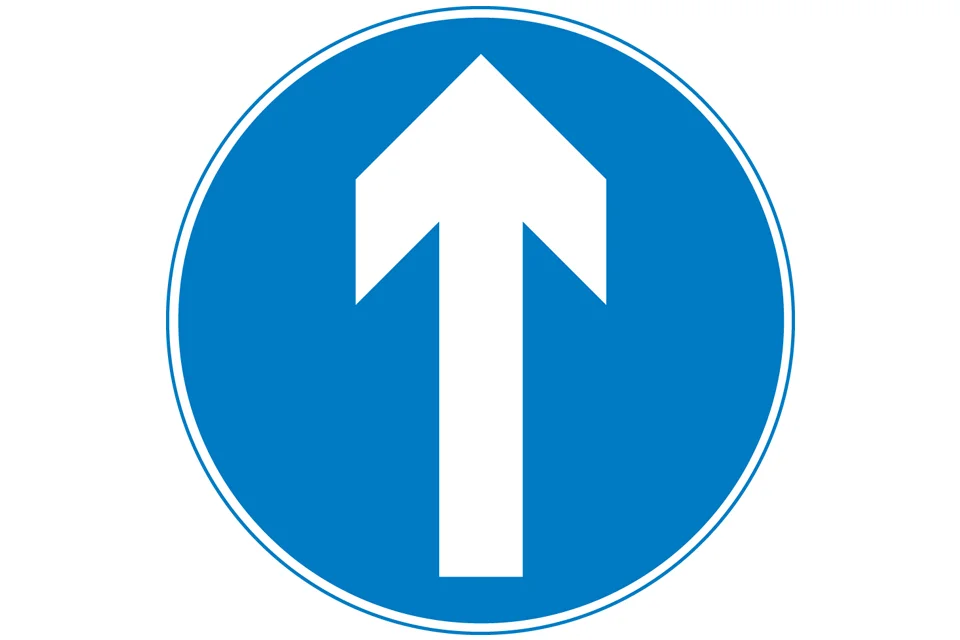
Ahead only — A white upward arrow on blue. You must go straight ahead — no turning.
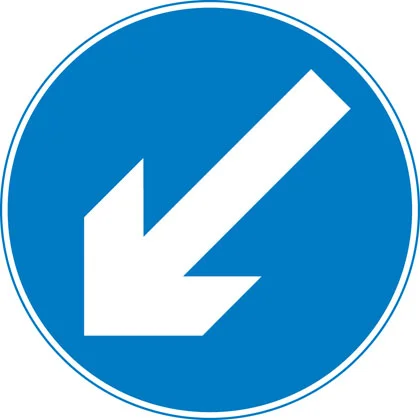
Keep left — A white arrow curving left on blue. Pass to the left of the sign or obstacle.
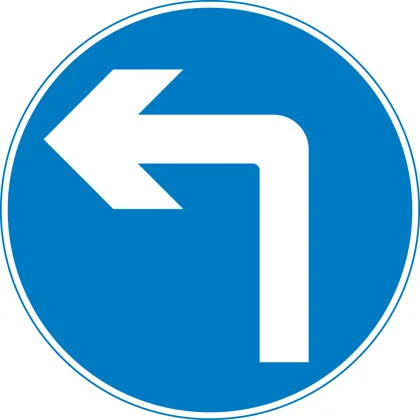
Turn left ahead — An arrow pointing left then up. You must turn left at the junction ahead.
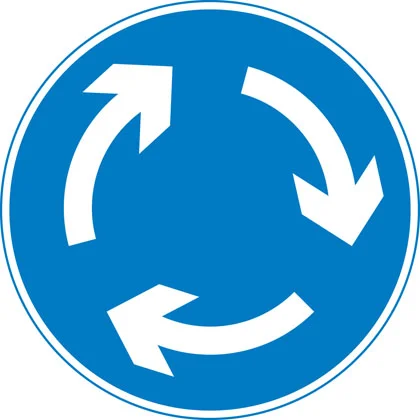
Mini-roundabout — Circular arrows on blue. Give way to vehicles from your immediate right.
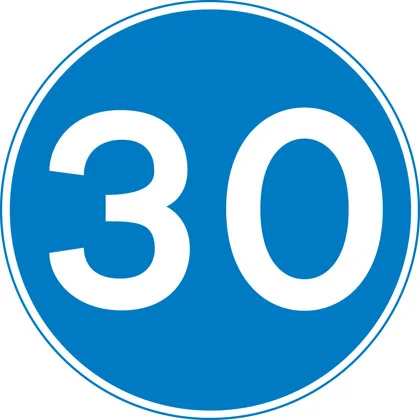
Minimum speed — A number in white on blue. You must not drive below this speed unless unsafe to comply.
Practice tip: The difference between red and blue circles trips up a lot of candidates. Test yourself on signs giving orders →
Information and direction signs
Information signs are rectangles or squares. They give you useful guidance but carry no legal obligation.
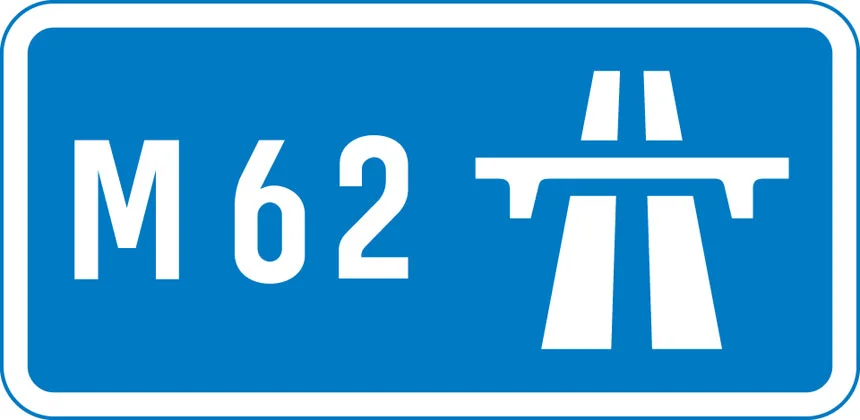
Start of motorway — Motorway regulations apply from this point. Learner drivers, cyclists and certain slow vehicles are prohibited.
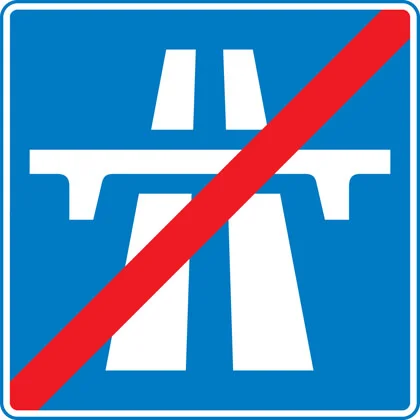
End of motorway — Normal road rules resume. Adjust your speed — the limit often drops.
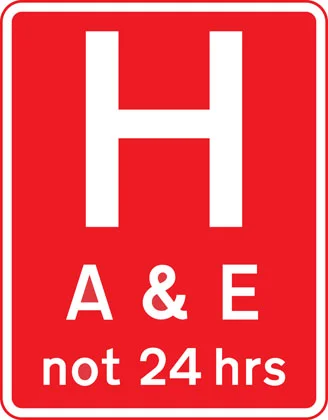
Hospital with A&E — If the sign says “not 24 hrs,” the A&E department is not always open.
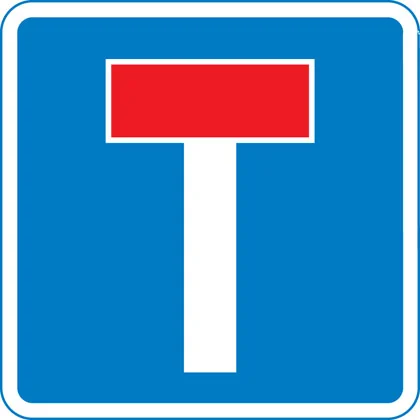
No through road for vehicles — You can enter, but you cannot drive through to another road.
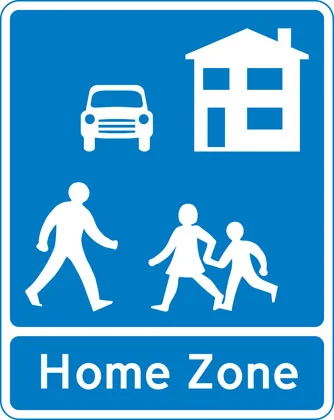
Home zone entry — Pedestrians and cyclists have priority and may use the full width of the road. Drive slowly.
Road works signs
Road works signs use a yellow background — the one exception to the standard colour rules. Yellow means temporary.
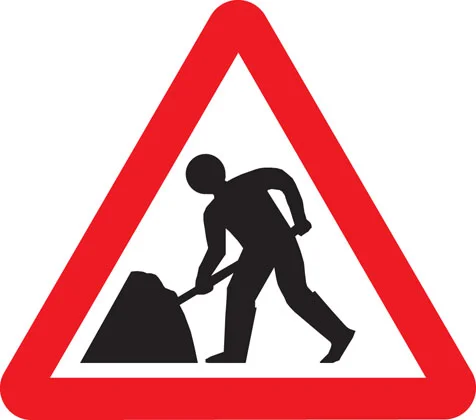
Road works — Reduce your speed, watch for changed lane layouts and be prepared for temporary traffic lights.
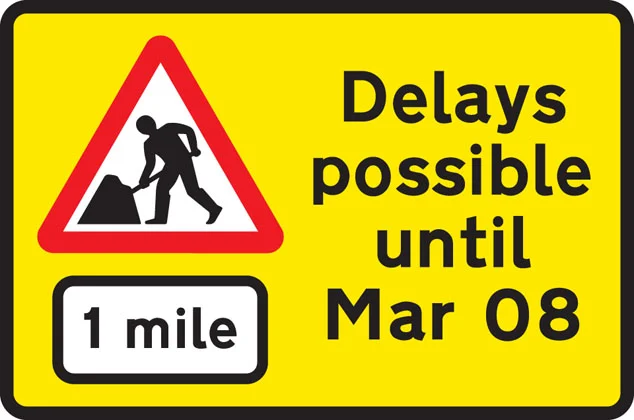
Road works 1 mile ahead — Start reducing your speed gradually — do not leave it until you see the cones.
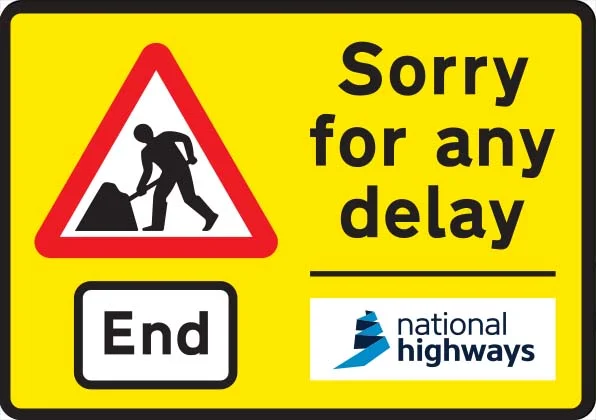
End of road works — Normal rules and speed limits resume from this point.
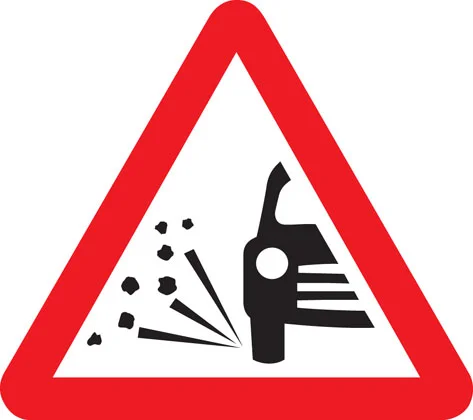
Loose chippings — Reduce your speed — chippings can be thrown up by vehicles and damage windscreens or injure other road users.
One thing many learners do not realise: temporary speed limits at road works are legally enforceable, whether workers are present or not.
The signs that catch most learners out
These are the signs with the highest failure rate in the theory test — worth spending extra time on.
1. National speed limit vs. speed limit cancelled
The white circle with a diagonal stripe means national speed limit applies — not “no restriction.” The national speed limit varies by road type.
2. No waiting vs. no stopping
No waiting means you cannot park or wait, but you can briefly stop to drop someone off. No stopping means you cannot stop at all.
3. Give way vs. stop
The inverted triangle means give way — you do not have to stop unless there is traffic. The octagonal red STOP sign requires you to stop completely, even if the road appears clear.
4. Level crossing signs
There are several: the advance warning triangle, the St Andrew’s Cross at the crossing itself, and the miniature red warning lights sign. Each tests a different thing.
5. Priority signs
The red-bordered diamond means you must give priority to oncoming vehicles. The blue diamond means you have priority over them. They look similar but mean the opposite.
Three techniques to memorise road signs faster
1. Learn the system, not the signs
Once you know that red circles prohibit, blue circles instruct and red triangles warn, you can work out around 80% of signs from first principles.
2. Group by shape and colour
Go through all warning signs together, then all prohibition signs, then all blue circle signs. Your brain learns patterns much faster than isolated facts.
3. Test yourself, do not just read
Reading a sign and recognising it in a test are completely different skills. Use active recall — cover the description and try to say what each sign means before checking. The TheoryMates road signs practice section lets you do exactly this with all 80 most commonly tested signs.
Frequently asked questions
How many road sign questions are in the theory test?
The 50-question theory test draws randomly from over 700 DVSA questions across 14 categories. Road and traffic signs is one of the largest categories, so you can expect roughly 8–14 sign-related questions in any given test.
Do I need to know every single road sign?
No. There are over 1,000 signs in the official DVSA catalogue, but the theory test focuses on the most commonly encountered ones. Mastering the signs in this guide covers the vast majority of what you will face.
What is the difference between a warning sign and an order sign?
A warning sign (red triangle) tells you something is ahead — it informs but does not legally require you to do anything specific. An order sign (red or blue circle) is a legal instruction that you must comply with.
Can I fail the theory test just on road signs?
Not technically — the pass mark of 43 out of 50 applies to the whole test. But road signs is one of the most heavily tested categories, and learners who are weak on signs often struggle to reach 43.
Why are some road signs yellow in the UK?
Yellow background signs are temporary — almost always related to road works or diversions. Temporary speed limits shown on yellow signs are legally enforceable.
Ready to test yourself?
Reading about road signs is only the first step. The real preparation is recognising them under test conditions — quickly, without thinking twice.
TheoryMates has 80 road sign practice questions using official UK government sign images, with detailed explanations for every answer. No signup required.
Ready to practise?
Test your knowledge with free practice questions
TheoryMates has more than 800 independently written DVSA-style questions across 14 categories, with an explanation and Highway Code reference for every question.